Toronto Haiti Action Committee

Solidarity. Not Charity. Never Occupation

Toronto Haiti Action Committee - Solidarity. Not Charity. Never Occupation

In the News: UN will not compensate Haiti cholera victims, Ban Ki-moon tells president

by Rashmee Roshan Lall and Ed Pilkington. Originally posted at The Guardian

Ban Ki-moon photo by the World Economic Forum

Ban Ki-moon
photo by the World Economic Forum

The UN has taken the rare step of invoking its legal immunity to rebuff claims for compensation from 5,000 victims of the Haiti cholera epidemic, the worst outbreak of the disease in modern times and widely believed to have been caused by UN peacekeepers importing the infection into the country.

Citing a convention laid down in 1946, the UN secretary general, Ban Ki-moon, telephoned President Michel Martelly of Haiti to tell him that the UN was not willing to compensate any of the claimants. The epidemic has killed almost 8,000 people and stricken hundreds of thousands more – about one out of every 16 Haitians.

For the UN to claim immunity for a crisis that most experts are convinced it unwittingly caused through its own disaster relief mission is highly contentious. The infection is thought to have been carried into Haiti by UN peacekeepers from Nepal sent to help with disaster relief following the 2010 Haiti earthquake.

Continue reading

Press Release: Court’s Order That Jean-Claude Duvalier Appear In Court Is Another Victory For The Victims

Press release from the IJDH.

Court’s order that Jean-Claude Duva­lier appear in court is another vic­tory for the victims

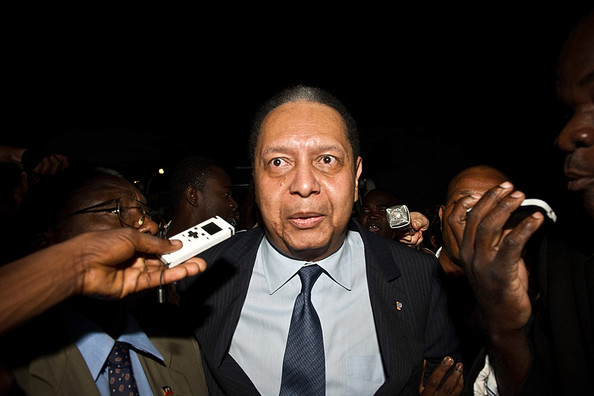
Baby Doc Duvalier returns to HaitiThe Bureau des Avo­cats Inter­na­tionaux (BAI), in its mis­sion to defend Haiti’s poor and the inalien­able rights inher­ent to all human beings, con­sid­ers the appel­late court’s reit­er­a­tion on Feb­ru­ary 7, 2013, of the sum­mons to Jean-Claude Duva­lier to per­son­ally appear in court another vic­tory for his victims.

Addi­tion­ally, this was the first time that the Court rec­og­nized Jean-Claude Duvalier’s sta­tus as the accused, so his per­son­nel appear­ance at a hear set for Feb­ru­ary 21, 2013, will be required or he risks arrest. Accord­ing to lawyer Mario Joseph of the Bureau des Avo­cats Inter­na­tionaux, one of the victim’s lawyers, “the Court’s order is also a vic­tory for the vic­tims claim­ing civil dam­ages because the Court also con­firmed our stand­ing as civil claimants despite efforts from the lawyers for the accused to derail the process. Their strat­egy was to block Duva­lier from appear­ing before the court to be questioned.”

Continue reading

Press Release: New report on housing by Mark Schuller

The first in a series of four reports on housing conditions and relocation was published today. Based on research conducted in July and August 2012 by Mark Schuller, with funding from the National Science Foundation, Homeward Bound? Assessing Progress of Relocation from Haiti’s IDP camps is available on the Institute for Justice and Democracy (IJDH) website.

Striking Haiti on its way to the United States’ eastern seaboard in late October, Hurricane Sandy exposed the precariousness of the estimated 370,000 people still living under tents almost three years after the devastating earthquake.

Yet the population of internally displaced persons (IDPs) peaked at 1.5 million. As a report from the US State Department pointed out, the current IDP population is estimated at 25% of this total. Much has been said about the efforts of the international community to rehouse this vulnerable population, particularly President Michel Martelly’s “16/6″ program and the NGO programs that have followed.

Continue reading

A Soapbox in Haiti

Here’s a video passed along from the IJDH. This video is part of a series called “A Soapbox in Haiti,” which presents the voices of Haitian citizens on topics significant to the country’s post-earthquake recovery. This particular video gives us human rights lawyer Mario Joseph talking about the justice system in Haiti:

Amnesty International: Lawyers in Haiti Threatened and Intimidated

Amnesty International Urgent Action release, UA: 279/12 Index: AMR 36/009/2012 Haiti Date: 4 October 2012

Three lawyers in Haiti are reporting an increase of threats and intimidation against them in recent months. They believe they may be targeted for their activism and criticisms against the Haitian government.

On 28 September, the Chief Prosecutor of Port-au-Prince, Jean Renel Sénatus, was interviewed at local radio station, where he discussed his dismissal by the Ministry of Justice because he refused to implement a ministerial order to arrest 36 political opponents. It is not clear on which grounds these arrests had been ordered. The Ministry of Justice denied having given such orders.

Mario Joseph of BAI

Among the 36 political opponents were the names of lawyers Mario Joseph, Newton St-Juste and André Michel. Mario Joseph is a prominent human rights lawyer who is involved in sensitive judicial cases such as proceedings against former dictator Jean-Claude Duvalier, complaints against the UN for their alleged involvement in spreading the cholera epidemic in Haiti, and cases of forced evictions of people made homeless after the earthquake. As head of the International Lawyers Office (Bureau des Avocats Internationaux), he addressed the Inter-American Commission of Human Rights last July, requesting to visit Haiti to investigate human rights violations. Newton St-Juste and André Michel, also lawyers, recently filed criminal grievances against the wife and the son of the President of the Republic of Haiti for corruption and embezzlement of public funds.

Continue reading

In the News: Cholera case against UN stalls in Haiti

by Jason Hayes
Originally posted at Global Post

Mojes, a cholera victim who spent five days in the hospital to survive the diarrheal bacterium, and the UN, a conglomeration of 193 countries that will spend $793 million on MINUSTAH this year, might appear to be a mismatch. But Mojes is not alone.

With over 7,000 dead and annual epidemics after the rainy season, more than 15,000 cholera-affected Haitians joined together to file a legal complaint against the UN on November 3, 2011. The case asserts that UN troops from Nepal brought cholera to Haiti when their sewage contaminated a tributary of the Artibonite River in October 2010. Asked what he hopes for from the case, Mojes said, “Make the damages better.”

Now, seven months after the complaint was filed, their case sits idle because the UN denies responsibility for bringing cholera to the country. So, where will Mojes and his fellow Haitians go now? When it comes to the largest international organization in the world, one built on the shoulders of almost every country in the world, there is no appeals court: there is no higher governing body.

Continue reading