Toronto Haiti Action Committee

Solidarity. Not Charity. Never Occupation

Toronto Haiti Action Committee - Solidarity. Not Charity. Never Occupation

In the News: Accused of Sexual Abuse, MINUSTAH Officer Flees Haiti

Originally posted at CEPR.

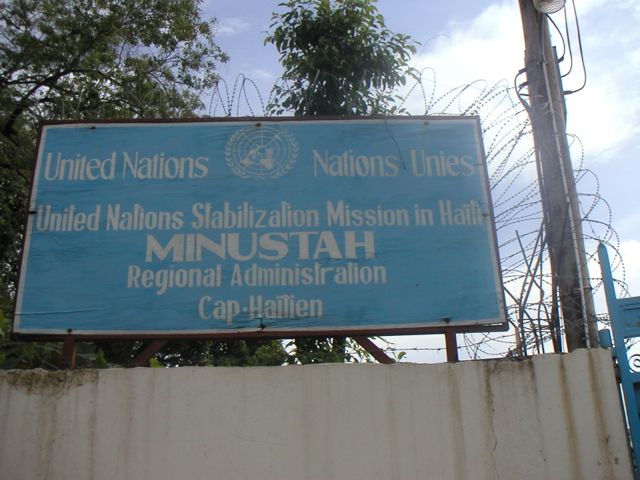
MINUSTAH Base in KapayisyenIn February, the United Nations confirmed that a Canadian serving with the United Nations Police contingent of MINUSTAH had been accused of sexually and physically assaulting a Haitian woman. Yesterday, Marie Rosy Kesner Auguste Ducena, a lawyer with the Haitian National Human Rights Defense Network, told CBC news that, though the victim reported the assault to police, “nothing will happen… Women who will go to complain, you will see that maybe somebody will take the complaint and will say to her you will be called after. But in fact, the case will just be closed.” CBC notes that the “day after the incident, the man boarded a flight back to Canada, where he remains.”

This is but the latest in a series of sexual abuse allegations leveled against MINUSTAH personnel in Haiti. According to U.N. data, since 2007 there have been 70 allegations of sexual abuse and exploitation against MINUSTAH members, but as CBC news points out, “not one has ended up in a Haitian court.”

Continue reading

In the News: UN will not compensate Haiti cholera victims, Ban Ki-moon tells president

by Rashmee Roshan Lall and Ed Pilkington. Originally posted at The Guardian

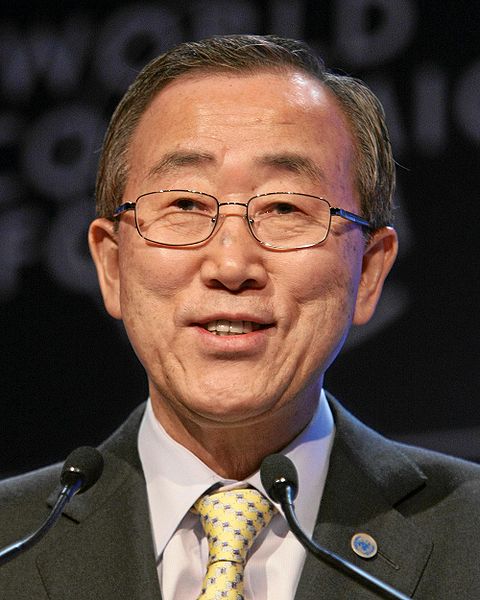
Ban Ki-moon photo by the World Economic Forum

Ban Ki-moon
photo by the World Economic Forum

The UN has taken the rare step of invoking its legal immunity to rebuff claims for compensation from 5,000 victims of the Haiti cholera epidemic, the worst outbreak of the disease in modern times and widely believed to have been caused by UN peacekeepers importing the infection into the country.

Citing a convention laid down in 1946, the UN secretary general, Ban Ki-moon, telephoned President Michel Martelly of Haiti to tell him that the UN was not willing to compensate any of the claimants. The epidemic has killed almost 8,000 people and stricken hundreds of thousands more – about one out of every 16 Haitians.

For the UN to claim immunity for a crisis that most experts are convinced it unwittingly caused through its own disaster relief mission is highly contentious. The infection is thought to have been carried into Haiti by UN peacekeepers from Nepal sent to help with disaster relief following the 2010 Haiti earthquake.

Continue reading

In the News: Canadian officer on Haiti mission accused of assault

A Canadian police officer serving with the United Nations Stabilization Mission in Haiti has been accused of sexual assault.

The RCMP says a Haitian woman complained to Haitian National Police that a Canadian police officer sexually and physically assaulted her.

Spokesman Vincenzo Pugliese, confirmed the UN is currently investigating the alleged incident.

The RCMP says the officer returned to Canada on his own without authorization from Canadian or UN authorities.

A spokesperson for Canada’s foreign affairs minister John Baird responded to the allegations in an email.

He said the government is taking the allegations very seriously, and said Canada would co-operate with any potential investigations.

More than 80 Canadian police officers are working with the UN mission in Haiti.

Haiti’s Struggle for Freedom: US Imperialism, MINUSTAH and the Overthrow of Jean-Bertrand Aristide

by Timothy Alexander Guzman, Global Research, December 27, 2012

A former French colony called Saint-Domingue in the Western side of the Spanish Island of Hispaniola erupted into a Slave revolt against France. The revolt cost the lives of over 100,000 blacks and over 20,000 whites not including innocent civilians caught in the crosshairs of the revolution. The new Haitian Republic was born and won its independence from France in 1804. It became a free Republic that abolished slavery and became a center of inspiration for many African slaves across the world.

But since the Haitian Revolution and it’s resistance to slavery, Western nations has managed to keep Haiti enslaved. From Internal conflicts that divided Haiti to successive dictatorships and a constant fear against a French invasion in the decades that followed, Haiti has always experienced a struggle for freedom. When President Theodore Roosevelt introduced “The Roosevelt Corollary” in a 1904 address to the US congress in relation to the Monroe Doctrine, he mentioned the fact that the US will intervene on the side of Europe who was in constant war against their former colonial possessions in Latin America if any new conflict were to arise from that point on. In 1915, the US Marines lead by Major General Smedley Butler, occupied Haiti under the orders of US President Woodrow Wilson to protect US Corporations and to prevent a people’s revolution. The occupation lasted until 1934. Then after the US occupation ended, Haitians chose a national assembly and elected Sténio Joseph Vincent as President of Haiti with US approval turned out to be an Authoritarian President.

Continue reading

In the News: Martelly to Haitians in South Florida: ‘Haiti has changed a lot’

by Jacqueline Charles and Nadege Green, The Miami Herald, Dec. 10, 2012

Haitian President Michel Martelly said Monday he plans to introduce an amendment in parliament giving millions of Haitians living in the diaspora, including South Florida, the right to vote in future elections. “Of course it will be up to the parliament to decide if it goes through,” Martelly said during a press conference Monday after an all-day invitation-only diaspora forum with members of the Haitian-American community at the North Miami Beach Library.

Martelly arrived in Miami over the weekend after a tour of Japan. He said he proposed the South Florida visit and the meeting with the Haitian community “to first of all thank the diaspora for their support” during his historical 2011 presidential victory and “to inform them on the progress in Haiti and finally to find a way to engage them to help us really develop Haiti.”

“I believe there is more that can be done by the diaspora,” he said. “But before we even ask for anything, I thought it was very important that we come here to not just tell them what we do, but also show them.”

Continue reading